For the people at the machine
Technicians are there to fix things, not to write them up.
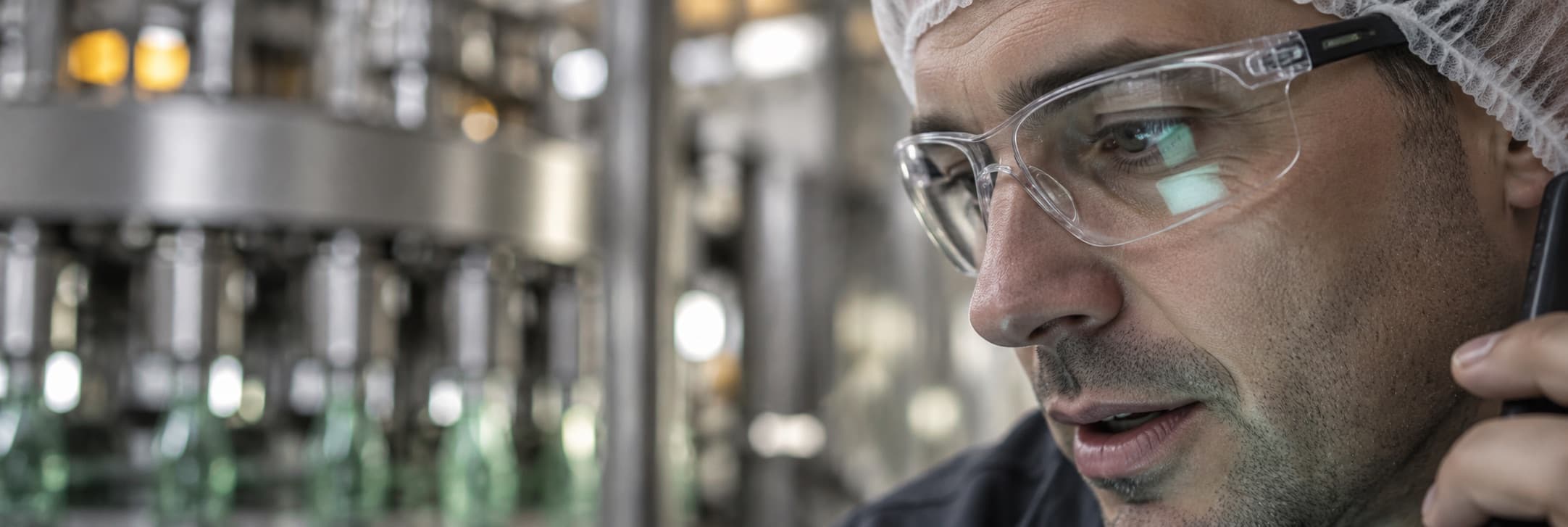
Every tool that asks a maintenance technician to document more gets used for three weeks. Norlan is built the other way round: your technicians solve the problem the way they already do, out loud and with their hands dirty, and the writing is the software's job. What the plant needs to keep gets kept, with their name on it.
Rotary filler RF-880 · Berlin
Note · R. Ortega · 12 Mar
“Manifold needs re-torquing after the first hour at full speed. Every time, not in the manual. Half a turn on the two front bolts.”
Does not open a thread.Turn into an incident
What technicians ask for
“Simple systems to capture experience. On the phone, with the photo and the video, while the job is happening.”
That is the whole of it. A thread is what happens when you stop asking them for a report and keep the conversation instead.
Will they use it?
What has to be true for a technician to keep using it.
None of these is a feature. They are the reasons a tool survives contact with a real shift, and they were written from what technicians told us during validation.
They talk instead of typing
Gloves on, torch in one hand, the line waiting. A voice note is transcribed and attached to the machine, and it counts as much as a typed report.
Nobody grades their writing
Typos, half sentences and the word they use for that part rather than the one in the manual. Norlan tidies it into something the next person can follow.
They stay the author
The AI proposes the wording, never the facts. The technician's name is on what they found, and nothing gets published because a model was confident.
They ask the machine before they phone someone
The machine answers at three in the morning, with the manual page and what was done to it last time, so nobody has to wake the one person who knows.
Not another feed to keep up with
The thread is the machine's history, not a plant social network. It is there when they open the asset, and it does not chase anyone on their day off.
One phone, in front of the machine
The thread, the photos, the step-by-step guides and the manuals on the phone they already carry, not on a terminal at the other end of the plant.
What they send, and what gets recorded
They talk. Norlan writes.
Norlan takes the writing off their hands and keeps them as the author. They talk, take a photo, type in their own language with the typos of someone holding a torch. Norlan records what the plant needs.
- Voice, clean-up and self-corrections
- Plant context: asset, component, cause
- Reading in another language
What the technician sent

T. Walker · Maintenance
“uh… so, the, the motor on the detector, the one on line two, um… it's making a weird noise, like, after the format change… [4 s] … I checked the relay and, eh… nothing, so… yeah. [6 s] … no no, wait — not the motor, I mean the belt, the conveyor belt. And it's line one, not two. [2 s] … that's it.”
06:31
What Norlan records
Abnormal noise from the conveyor belt after the format change. Relay K4 checked — no fault found.
- Transcribed
- Self-corrections applied
- Cleaned up
- Anchored to the asset
Original kept · Author: T. Walker · A person confirms before it publishes
What the technician sent

D. Hughes · Maintenance
beltt tension ok, detecter head recalibrated, stil rejecting. think its the produkt profile not reloded after format chage
14:07
What Norlan records
Belt tension OK. Detector head recalibrated; still rejecting. Likely cause: product profile not reloaded after the format change.
- Spelling and grammar
- Checks and cause extracted
- Anchored to the asset
Original kept · Author: D. Hughes · A person confirms before it publishes
What the technician sent

M. Brennan · Maintenance
Po zmianie formatu profil produktu nie przeładował się. Trzeba nacisnąć reset pod przekaźnikiem K4, za panelem.Polish
22:48
What Norlan records
After the format change the product profile did not reload. Press the reset switch under relay K4, behind the panel.
- Translated · Polish → English
- Anchored to the component
- Original kept
Original kept · Author: M. Brennan · A person confirms before it publishes
What maintenance managers ask about their teams
Is this more paperwork for my technicians?
Do they have to write in good English or in the manual's words?
Will my senior technicians get phoned even more?
What happens to what they know when they leave?
How much training does it take?
Book a demo
A 30-minute walkthrough built around the plant's machines, not a canned demo.
We start with the operation — which failures repeat, who gets called when something breaks, what the CMMS does not hold — and then show how Norlan would work on it.
What we usually cover
- How an incident flows today, from detection to fix
- Where the conversation actually happens: the systems, or calls and WhatsApp
- What takes longer — the diagnosis, or getting the right people and information together
- How much of what a technician knows is written down, and what happens when they are away
- Which tools are really in play: CMMS, ERP, mobile, paper
- What a pilot would measure, and how
Pick a time that suits the plant. Bring one failure that keeps coming back.
The call is with the people who build the product, with no qualification call first. Norlan is pre-general-availability and shaped with maintenance teams in pharma and food processing.