Recurring failures
The same failure is three different problems.
A fault that comes back on one unit, a fault that comes back on every unit of the model, and a fault that comes back because the last fix never held look identical on the shop floor. They are not fixed the same way. Norlan reads the machine's record and says which of the three it is, before anyone climbs in.
What repeats
Interventions grouped by what they describe
6 models share “Format change and adjustment”. Every row below appears on more than one model: none of them belongs to a single machine.
| Failure family | Times | Units | Models | Last |
|---|---|---|---|---|
Format change and adjustment | 15·1 | 8 | 6 | 29 Jul |
Belts and conveyors | 14 | 6 | 6 | 27 Jul |
Weight and calibration | 9·1 | 9 | 3 | 28 Jul |
Print head | 9 | 3 | 3 | 13 Jul |
Cutting and blades | 7·2 | 7 | 3 | 29 Jul |
Vacuum, sealing and film | 3·1 | 3 | 2 | 28 Jul |
Sensors and vision | 3 | 3 | 3 | 28 Jul |
In “Times”, the red figure is what is still open. The CMMS lists each of these as separate work orders.
It comes back on this unit
Then the cause is on the unit, not in the manual
The manual describes the machine as it left the factory. A failure that keeps returning to one unit and no other is usually about that unit: how it was installed, what it is fed, the retrofit nobody documented, the way that line runs it. Norlan keeps that on the unit — the field note from the last closure, the reading, the photo — and the assistant reads it before it reads the manual.
- The unit's own closures, cited before any general answer
- What was already ruled out on this unit, with who ruled it out
- A field note pinned to the unit, invisible to the others
False rejects after a format change
Metal detector MD-3000 · Berlin
T. Walker · Maintenance
“So it was the belt, erm… it went slack after the format change. Re-tensioned it and checked the K5 was seated — no, sorry, the K4. Ran twenty packs, none rejected.”
Norlan proposes the closure from the thread
- Problem
- False rejects on good packs after every format change: the detector rejects roughly one in forty within the first hour, then settles.
- Cause
- The belt slackens when the format changes and the K4 relay works loose with the vibration, so the reading drifts until it is reseated.
- Solution
- Re-tension the belt to 45 N, reseat the K4 relay and run twenty packs before calibrating. The relay step is not in the manual: it only shows up after a format change on this unit.
It comes back across the model
Then it is the model's problem, and the conversation is with the manufacturer
When the same failure closes on unit three in Berlin and unit five in Munich, the cause is in the design, the batch or the procedure, not in either plant. Norlan groups the equipment by model, so the pattern shows before the third unit fails, and the fix found on one reaches the rest. The manufacturer's engineer can be brought into the thread and see exactly that — the units, the closures, the evidence — and nothing else.
- Every unit of the model side by side, with what closed on each
- The recurring problem marked on the model once a technician validates it
- The manufacturer admitted to the thread, briefed by the record, not by a phone call
- A guide written once for the model, with the exception pinned to the odd unit
One guide, eight machines
Model
Metal detector MD-3000
Guide · Assign the product name
S1-PK-L1-0051
Berlin
S1-PK-L2-0018
Berlin
S2-PK-L4-0092
Munich
S2-PK-L7-0104
Munich
+ 4 more units
It comes back because the fix did not hold
Then what matters is not the last fix. It is whether the last fix worked.
Finding the earlier repair is the easy half, and every tool now promises it. The half that decides whether it gets repeated is knowing if it held. Closing in Norlan writes the problem, the root cause and the solution, and asks a named person to say it works on the machine. When the failure returns anyway, the record shows that too: the closure that did not hold, the one that superseded it, and the guide version that came out of it.
- Every closure verified on the machine by a named person
- A fix that failed stays on the record as a fix that failed
- The guide that replaced it carries the version and the reason
- The assistant cites the fix that held, not the first one it finds
False rejects after a format change
Metal detector MD-3000 · Berlin
T. Walker · Maintenance
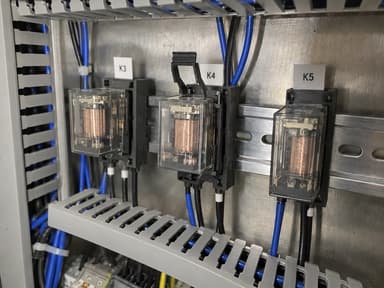
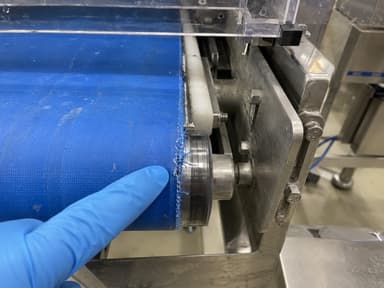
“So it was the belt, erm… it went slack after the format change. Re-tensioned it and checked the K5 was seated — no, sorry, the K4. Ran twenty packs, none rejected.”
Norlan proposes the closure from the thread
- Problem
- False rejects on good packs after every format change: the detector rejects roughly one in forty within the first hour, then settles.
- Cause
- The belt slackens when the format changes and the K4 relay works loose with the vibration, so the reading drifts until it is reseated.
- Solution
- Re-tension the belt to 45 N, reseat the K4 relay and run twenty packs before calibrating. The relay step is not in the manual: it only shows up after a format change on this unit.
For the maintenance manager
What repeats across the plant, grouped by what it describes
Interventions sorted by what they were about, not by which machine raised them. A row that appears on six models is a plant problem — a spare, a supplier, a procedure — and it is the one worth a guide before it is worth another repair. Next to it, the models that depend on one person to close them, because a repeat that only one technician can solve is a risk with a date on it.
- Repeats across the plant, in one table, with the units they touch
- Which of them already has a guide, and which is still solved by memory
- The models with a single expert, marked before the sick leave
Who closes what
By model · last 12 months
8
people who close
15
models with history
3
models with one expert
| Model |  Walker |  Bermúdez |  Costa |  Weber |  Ruiz |  Nowak |
|---|---|---|---|---|---|---|
Labeller LB-200 1 unit · 33 closures | 6 | 7 | 6 | 7 | 7 | |
Slicer SL-7 11 units · 9 closures | 2 | 3 | 1 | 2 | 1 | |
Checkweigher CW-500 8 units · 7 closures | 2 | 2 | 1 | 1 | 1 | |
Metal detector MD-3000 1 person 7 units · 6 closures | 6 | |||||
Rotary filler RF-880 2 units · 2 closures | 1 | 1 | ||||
Vision camera VC-12 1 person 1 unit · 1 closures | 1 | |||||
Tray packer PK-40 3 units · 2 closures | 1 | 1 | ||||
Case labeller LB-40 1 person 1 unit · 1 closures | 1 |
Where the line is today
Norlan does not predict. It remembers.
No vibration trends, no sensor thresholds, no model that says the bearing has nine days left. Norlan works from what the technicians did and said on the machine: the closures, the readings they wrote down, the photos they took. If the plant runs condition monitoring, Norlan sits next to it and holds the part it does not — what was done about the alert, and whether it worked.
Questions about recurring failures
How does Norlan know two incidents are the same failure?
Is this predictive maintenance?
What if the fix that worked last time was the wrong one?
Our repeats are on different machines in different plants. Does that still count?
Does Norlan replace our CMMS?
Book a demo
Bring the failure the plant is most tired of. We will show what its record would already say.
We start with the operation — which failures repeat, who gets called when something breaks, what the CMMS does not hold — and then show how Norlan would work on it.
What we usually cover
- How an incident flows today, from detection to fix
- Where the conversation actually happens: the systems, or calls and WhatsApp
- What takes longer — the diagnosis, or getting the right people and information together
- How much of what a technician knows is written down, and what happens when they are away
- Which tools are really in play: CMMS, ERP, mobile, paper
- What a pilot would measure, and how
Pick a time that suits the plant. Bring one failure that keeps coming back.
The call is with the people who build the product, with no qualification call first. Norlan is pre-general-availability and shaped with maintenance teams in pharma and food processing.